 |
Adventures in Micronesia
Yap and Palau, November, 2000
By Kandie and Drew Vactor
 |
So began our two-week adventure in the Caroline Islands of Micronesia. We were on another excellent Desert Divers trip with one week exploring the hard coral gardens and Manta Rays in Yap and the following week on a live aboard dive boat hanging around the sharks and steep walls of Palau, not to mention the cuttlefish. For those of you asking, “Where is Micronesia?” it is a group of islands in the South Pacific just north of the equator, 2 hours by jet southwest of Guam, south of Japan, east of the Philippines, and north of Papua New Guinea and Australia on the edge of the Mariana Trench. In a more romantic concept, it is deep in the South Pacific. This is abundantly evident with the 24-hour travel time to go halfway around the world.
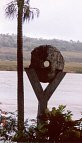
These peaceful islands and nations have been the sites of many struggles over the centuries, including several deciding battles in WWII, but they remain seemingly untouched by this terror. The people of Yap are peaceful and very friendly. They are true to their own tribes and customs, including traditional stone money and chewing betel nuts, while graciously welcoming visitors to their paradise. Palau contains more trappings of the western world, including a shopping center with a Ben Franklin as the anchor store, but the people have the same soft, slow grace of their South Pacific heritage. But, I get ahead of our story.
We flew in from Guam with Bill and Patricia Acker, the gracious owners of The Manta Ray Bay Hotel and Yap Divers. Check out their extensive and beautiful web site at http://www.mantaray.com/ . The slide show on their “Cleaning Station” site will give you a very good idea of what we saw. Fantastic! The hotel is right on the water, convenient to their dive boats and gear storage. The rooms are spacious and large, but not too city-slick. They maintain the comfort and relaxed atmosphere of the island without giving up any of the comfort and amenities we have become accustomed to. The food is fresh, the potable water is great and the friendly staff’s smiles are genuine. The hotel is filled with artwork and beautiful pictures of what was awaiting our discovery under their clear, beautiful water. Every room is named after a sea animal, with its image carved on the hand-hewn door and on the matching key fob.
Yap
is a part of the Federated States of Micronesia (FSM). Unlike many South Pacific islands, Yap is an uplifted portion of
the Asian Continental Shelf. A broad shallow lagoon and nearly 90 miles of beautiful
barrier reef surround it. The hard coral
gardens on the west side of the island are pristine. The first afternoon we couldn’t wait to get
our gills wet, so we were treated to two beautiful dives in the hard coral gardens.
The white coral shelves looked like cantilevered platforms cascading down the
gently sloping reef. They reminded me
of an alien city in a sci-fi movie with black and white humbugs and tiny blue
damsels floating above the platforms. Lionfish, Bumphead parrots up to 4 feet long, colorful yellow butterflyfish,
angelfish and wrasses added to the rainbow of activity on the reef.
Of course the black tip shark swimming along the reef was also interesting
to watch.
The biggest underwater attractions in Yap are the Manta ray cleaning stations. There are several resident Mantas in and around Yap and, although activity and sightings are highest in the January through May mating season, we were not disappointed. We spotted Mantas on their way to and from the cleaning stations, and spent time at the stations in complete awe as we watched these huge and gentle animals allow smaller wrasse to clean any parasites and other ocean debris from their gills and skin. They are incredible animals. Just moving down Manta Ridge over M’il Channel is a treat, watching Mantas skim along the bottom, sharks swim next to you and thousands of fish move within the channel on their way to or from the ocean.
Between dives looking for Mantas, we spent time diving places called Yap Corner and Vertigo which had dozens of gray and white tip sharks and Yap Caverns, a beautiful dive with pristine coral “swim throughs” and clouds of fish. We even had a small squid hide out under the boat for a while. Lionfish Wall was a great vertical wall filled with anemones and giant clams as well as great fish variety with a lovely coral garden on top, and Millennium Gardens offered deep cuts and canyons to wander through. We found very special and quite social cuttlefish on two occasions at Simakai and Pa’w. Spinner dolphins often chased our boat back to the mangrove passage back to our hotel. A special area developed for macro diving by Bill Acker called Macro 1:2 contained more nudibranchs and lionfish per inch than on any other dive. We found pipefish, mandarin fish, puffers, spotted cardinalfish and many kinds of sea cucumbers. It was like a treasure hunt. The diving in Yap is varied and definitely world class. The currents were mild; the visibility was 200 plus (except in the Manta areas where it was plankton-filled), and the drift diving easy for our 21 dives in Yap.
On our last day, we were treated to a kayak tour of the local mangroves. Patricia Acker shared many of the secrets of her native Yap with us as she led us to a Men’s House from a local tribe and described many of the customs, both ancient and current. The stone money, for which Yap is famous, is still in use today for major purchases and dowries. The mangroves are an integral part of the culture and ecosystem of this beautiful island.
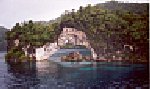
After a delightful week with Bill Acker and his wonderful staff, we winged our way over to Koror, Palau for our second diving adventure on the Palau Aggressor II http://www.aggressor.com/pa_home.html. Captain Brian Stephenson and his staff keep their ship clean and diver-perfect. The rooms are efficient and roomy, Chef Mike and Rose expertly presented the freshly prepared food, and the dive area was complete with storage benches, camera table, freshwater showers and rinse tanks. We dove from a skiff that was lowered into the water by an amazing hydraulic lift system. When it was “dive time”, we went down for the briefing, put on our wetsuits, walked on the skiff where our BCD was already connected to a new tank and where all of our dive gear was stowed. The skiff was lowered to the sea where we rode the calm waters for 10 minutes and then rolled into the ocean. Diving is easy there -- at least getting into the 84-degree water is.
Underwater,
Palau is known for drift diving, walls and currents. Yes, yes and yes! And the
number of fish --- both varieties and schools --- wow! The walls are steep, filled with vertical schools of Pyramid butterflyfish
and square dot anthias. In the cracks
and crevices, oriental sweetlips were getting cleaned, anemones flow in the current
with anemone fish darting in and out and the big-nose unicorn fish flash colors
looking for mating opportunities. When you get to the corner, you pop up to the
edge, hook on to the edge with your reef hook, which is attached to your BCD,
and watch the sharks move in and around the huge schools of fish vying for space
in the current. Then when you’ve had enough
(or your computer tells you enough is enough), you unhook, enjoy the ride in the
current and do your safety stop as you drift out to sea. When you pop up to the surface, the Aggressor
Skiff comes over to pick you up and whisk you back to the mother ship for snacks.
My
dive log for the Blue Corner exclaims: “I’m beginning to understand just how magnificent
Palau is. The reef wall was teeming with
fish. We spotted a dense whirlwind of
jacks that was swirling 50 feet high in the water column. We hooked off on the
edge of the corner and with a 250-pound Napoleon wrasse checking us out; we peered
out in the depths to watch an ever-changing wall of fish parade in front of us.
Then came the sharks, cruising so close to us you could count their teeth! The schools of barracudas and trevally, glassy
sweepers in a small cave, white tip sharks being cleaned on the sand, the Napoleon
wrasse watching our every move, where do you look first!?!” Just when we thought the dive was over and
could not have been better, we saw the spotted eagle ray coming in to its cleaning
station. Everyone froze in the water while
we enjoyed watching this magnificent animal stall in the water while it was being
cleaned. All too soon we had to surface.
Good thing we got to repeat this site two more times!
We
dropped though holes in the reef, saw turtles on almost every dive, checked out
caverns with huge openings with the top at 105 feet and the bottom beyond 130
feet and then floated through coral gardens
that reminded us of Disneyland. Two incredible
memories that persist, however, are of cuttlefish and whales.
We spotted the mating pair of cuttlefish early in the week on a night dive.
They were hovering over a stand of elkhorn coral in Turtle Cove and greeted
us with as much curiosity and respect as we had for them. We stayed with them for most of our dive, and
they were marvelous company, coming right up to us. Later in the week, everyone wanted to see these
wonderful and intelligent creatures. Back
we went to Turtle Cove and the entire boat descended on our two friends.
They patiently posed for pictures with everyone, like the movie stars they
were, then when all of the others went on to discover rays, leopard sharks and
a convention of Moorish Idols, we stayed and watched the female lay eggs and the
male defend his territory and mate from a male interloper.
Great drama.
On
our way back in from a dive, we encountered a pod of Pygmy Killer Whales. They were jumping like dolphins and talking
incessantly underwater. We quickly slipped
into the water with mask fins and snorkel --- and not one of us had a camera!
One whale came right in the middle of our group and bared his numerous
teeth -- lots of teeth -- just a few inches away.
We were starting to wonder if it had really been such a great idea to jump
into the middle of their pod, when we realized the whale was chasing a snapper
that was hiding in our midst. Lucky for
us the whale was more interested in the fish!
What a thrilling encounter with life far larger than us. It was one of those experiences when you realize that we are not
at the top of the food chain, at least in the ocean.
No
trip to Palau is complete without a trip to famous Jellyfish Lake. Access required a challenging climb over the
ridge that now blocks this landlocked body of brackish water from the sea, isolating
its population of Jellyfish. We had to
be careful not to grab the surrounding poisonous trees as we climbed the steep
hill. Once we climbed back down to water
level, donned our masks and fins and slid into the salty water, we had to hunt
for the huge school in the sunny spot in the lake. The plump golden mastigias jellyfish were smooth
to the touch, but did not shock or sting. The clear to white moon jellies that were mixed in were similarly
without nematocysts. It was very strange
to be snorkeling while being bumped and thumped by these small dynamos of energy,
all seemingly on their way somewhere in a hurry. The tiny ones were working the hardest while
the large ones were elegant with their undulating motion.
And
then there was our final dive in Chandelier Caverns, a three-chambered cavern
with entrances 20 feet underwater. The
chambers were covered with stalactites and breathable air, though no light source.
It was eerie to swim back to the entrance using only ambient light from
the small entrance hole. Outside was a shallow rubble field in which
the elusive but colorful orange and green mandarin fish hung out. It was like a treasure hunt, and curiously
satisfying when we discovered and watched the tiny fish dart in and out of view
in the coral. Time to return to pack and
begin our marathon trip home. The staff
on the Palau Aggressor II really made our stay pleasurable and trouble-free.
Was
it worth it? Are Yap and Palau destinations
worth putting in your wish book? Absolutely!
Between the clear, warm waters and unusual and abundant animals, this area
is incredible. Every one of our 43 dives was unique, interesting
and fascinating. It was a wonderful adventure. If it weren’t so far away,
we would be there often. Hope you find
your way to this peaceful part of the world, too.